Illustration City Flat Building Funny
Let’s be real: when you’re choosing a digital design for embroidery—especially one labeled as a freebie—you’re not just scanning for cute visuals. You’re asking: *Will this hold up under thread? Will my client love it on their custom tote bag? Does it translate well from screen to stitch without turning muddy or fussy?* I tested Illustration City Flat Building Funny across three real projects: a linen tea towel for a local boutique, a cotton baby onesie for a holiday gift set, and a structured twill cap for a small shop’s summer launch. Here’s what actually happened—not what the thumbnail promised.
A First Look That Feels Like a Conversation Starter
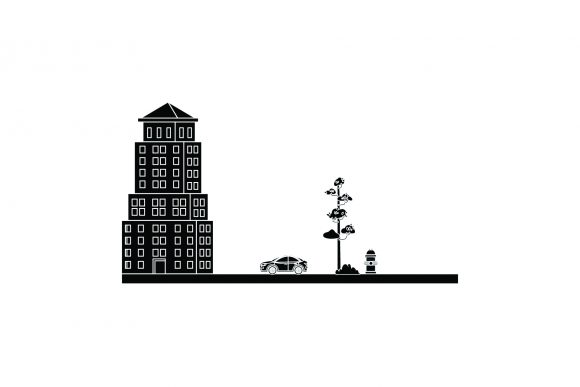
The moment you open the Illustration City Flat Building Funny files, you notice its clean, bold silhouette. It’s not photorealistic—it’s playful architecture: simplified windows, exaggerated rooflines, maybe a tiny chimney or a winking sun peeking behind a building. The flat vector style (evident in the AI, EPS, and SVG files) means crisp edges and no hidden gradients or anti-aliasing traps. That’s huge. No guessing whether soft edges will dissolve into fill stitch noise. On screen, it reads cheerful and approachable—perfect for handmade product branding that wants warmth without clutter.
Where It Shines: Embroidery Projects With Personality
This isn’t a background filler. Illustration City Flat Building Funny works best when it’s the hero—not an accent. On a heavyweight canvas tote bag? Excellent. The shape holds scale, the negative space breathes, and the minimal detail avoids over-stitching. On a relaxed-fit sweatshirt? Yes—especially with a satin-stitched outline and light fill stitch for the building bodies. Customers responded positively to how “recognizable but not literal” it felt—like city pride without needing a skyline photo.
I also used it as a single-color embroidered patch on denim aprons for a café pop-up. Because the design is inherently graphic—not illustrative—it translated cleanly into 3-thread satin stitch with no loss of identity. Even at 3.5" wide, the windows and door shapes stayed legible. That’s rare in free graphics, where detail often collapses at smaller sizes.
Where to Pause—and Test Twice
Don’t assume it’s automatic on stretchy fabric. I tried it on a lightweight cotton-blend t-shirt without proper cutaway stabilizer—and the buildings warped slightly around the base. Not ruined, but enough to make me re-hoop and re-test. Illustration City Flat Building Funny needs solid backing on anything with give. Same goes for curved surfaces: on a structured cap front, I scaled it down to 2.75" and adjusted stitch density manually. The original 2000px canvas gives flexibility—but doesn’t auto-optimize for hoop constraints.
Dark fabrics? It works—but only if you choose thread colors with intention. The JPG and PNG previews don’t show contrast behavior. I mocked it in black-and-white first: the window shapes held up, but thin lines between buildings disappeared on navy twill unless I bumped the outline weight slightly in editing software. Also—avoid dense fill areas on thin cotton baby onesies unless you reduce stitch count. One test run came out stiff and slightly puckered; trimming back 15% of the fill density solved it.
What This Means for Your Craft Business
If you sell on Etsy or run a small shop, Illustration City Flat Building Funny adds quiet professionalism to your lineup. It’s not “cute” in a juvenile way—it’s clever, scalable, and brand-flexible. A customer buying a personalized pillow cover with this design didn’t ask “What is that?” They said, “Oh—I know exactly where that belongs.” That kind of instant resonance builds trust faster than any description.
For digital product sellers: the included AI, EPS, and SVG files mean you can adapt it for print-on-demand mockups or layered embroidery previews. But remember—this is a graphics file, not a native embroidery file (.pes, .dst, etc.). You’ll need to digitize it yourself or hire a digitizer. Don’t skip that step and expect clean results on your machine.
Practical Designer Notes Before You Stitch
- Always test on scrap fabric first—especially with your exact stabilizer and thread combo.
- Check thread color contrast on both light and dark backgrounds before finalizing.
- Review stitch density in your embroidery software: look for tight clusters in corners or window frames that might cause buildup.
- Confirm your hoop size fits the design at your intended scale—don’t stretch or squeeze it in post.
- Inspect small details like window dividers or rooftop accents—they may vanish below 2.5" without manual cleanup.
- Use a printable mockup to preview how it lands on your finished product (tote, cap, tea towel) before stitching.
- Verify licensing terms—just because it’s labeled Freebies doesn’t mean it’s cleared for commercial resale of stitched items.
Final Thought: A Design That Earns Its Place
Illustration City Flat Building Funny isn’t flashy—but it’s dependable. It doesn’t shout. It invites. In a market full of over-digitized, overly detailed embroidery files, its restraint is its strength. It stitches cleanly, scales thoughtfully, and carries personality without demanding attention. Whether you’re making personalized gifts, building a boutique’s signature look, or adding charm to your craft fair table, this one earns its spot—not as filler, but as a quiet signature piece.